by Antony R. Henk
One of the first and most profound experiences I had in my undergraduate coursework was in my very first course in Old English in the late 20-teens, then taught at the University of West Florida by Professor Robert F. Yeager. We had been assigned to translate a passage by Ælfric of Eynsham, a preface he composed to discuss the challenges and dangers he saw in translating the texts of the Bible into the vernacular. In one section of his preface, he explains how Biblical grammar reflects a key piece of Christian doctrine which, by Ælfric’s time, was well-established:
Oft ys seo halige þrinnys geswutelod on þisra bec, swa swa ys on þam worde þe God cwæþ: ‘Uton wircean mannan to ure anlicnisse.’ Mid þam þe he cwæð ‘uton wircean’ ys seo þrinnis gebicnod. Mid þam þe he cwæð ‘to ure anlicnisse’ ys seo soðe annis geswutelod. He ne cwæð na menifealdlice, ‘to urum anlicnissum’, ac andfealdlice, ‘to ure anlicnisse’. [1]
The Holy Trinity is frequently signified in these books, just as it is in those words that God spoke: ‘Let us make man in our image.’ [Gen 1:26] When He stated, ‘Let us make’, the Trinity is indicated. When He stated, ‘in our image’, the true Unity is signified. He did not say, plural, ‘in our images’, but singular, ‘in our image’.
By this point in my (admittedly delayed and non-traditional) educational trajectory, I had already realised that I desperately wanted to study early medieval England. I had thus made all efforts to translate the whole passage to the very best of my ability. And, as I translated, I understood precisely the concepts to which Ælfric referred: he was explaining that even tiny details of Scripture reflect the Trinitarian conceptions set out as official doctrine by the First Council of Nicaea in 325: In Christian belief, God, Jesus, and the Holy Spirit are not identical with each other, but they are all God, and God is all of them.
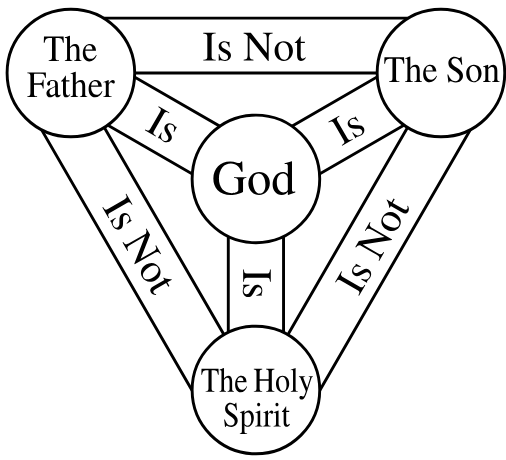
© Wikipedia
I recognized this paradoxical concept immediately when Ælfric brought it up because, as a child and teenager, I had been subjected to an intensely religious upbringing in the American evangelical Southern Baptist church. This was, to put it one way, challenging. Yet it did benefit me in that I developed a stronger-than-average awareness of the content of the Bible (well, except for those books that the pre-Baptist Protestants had decided to axe from the canon, like Maccabees). I could also, of course, recognise the Trinity when I saw it, even in a translation preface written by a monk over a thousand years ago. When asked about the material, I was the only student in the course to recognise the source of Ælfric’s concerns, even there in my deep-Southern hometown, where evangelical religion remains a culturally dominant force.
This was a portentous moment, though I did not then know it.
Today, teaching medieval European writings to a group of students (at least in Germany) is, for some of them, their first exposure to frank, detailed discussion of Christian thought in a classroom setting. Due to changes in social mores and/or differing cultural backgrounds, students often have little context for what they are reading. As a scholar of the early English church, whose work on the role of relics takes him into frequent and close contact with liturgiology, hagiography, patristic writings, and homiletic materials, I, on the other hand, have perhaps too much context. While context is important, it can, however, distract you from seeing themes or ideas that another reader may notice. Where my students may marvel at creative rhetorical turns and profound ideas in Bede or Ælfric, I may dismiss the same sentences as paraphrases and quotations from Augustine, Isidore, Ambrose, or John Chrysostom. [2] And while that sentence may inspire my students to a new and interesting interpretation, I may, on the other hand, be blind to what the passage truly has to offer.
The difficult aspect of this is, of course, how to talk about it in the classroom. In 2026, Christianity can be a fraught, ugly, violent, charged topic. Students have a wide variety of relationships to Christianity. Students from a background of firm Christian faith may find aspects of historical Christianity difficult to accept, even actively offensive. Others may be of a different religious faith and have strong feelings about the cultural hegemony Christianity holds, or they may be intimidated, uncomfortable that they lack some of the base knowledge others may have. Some even may have religious trauma associated with Christianity and find the subject deeply alienating. And Christianity’s history itself is punctuated with brutality, prejudice, and corruption at regular intervals, something it shares with most societal institutions. But I cannot truly teach hagiography without first talking about the violence committed against Christians in the Diocletian Persecution. By the same token, I cannot discuss the Diocletian Persecution without pointing out the Church’s self-interest in spreading propagandistic narratives that paint Christians as tragic victims of pagan cruelty or draw pilgrims to shrines with the promise of a miracle. Thus, my students and I are trapped together in a kind of uncomfortable prison in which I am bound to offend any devout Christians in the audience as much as I am bound to upset those who are sensitive to frank talk of violence.
I admit, I don’t have a good, simple solution to this problem. I do, however, have a couple of approaches that can be used to frame the topic of medieval Christianity in the classroom. I share them here for you to take, if you like. They have so far allowed me to have productive discussions on one of the most difficult things one can bring up in a multireligious, multicultural lecture hall:
- It’s worthwhile to be considerate of how ‘heavy’ the materials may be to students who aren’t used to reading medieval works. While I do not warn students in detail about what they will encounter in reading, I do give them a heads-up if a text contains very confronting material, and I describe briefly what it is (e.g., ‘This author makes some antisemitic statements in this text.’). I do this well before the class period, and I give the students the option to write a private response instead of attending the discussion. In the response, they can either discuss the reading itself, a secondary text about the reading, or they can respond to another reading from another part of the semester. Some may balk at providing this kind of way out, but so far in my experience, students rarely take advantage of this in the first place, while the option is often explicitly praised in feedback. It is on the whole important to keep in mind that medieval Christian writers tend overwhelmingly to be both deeply biased against, as well as quite ignorant of, Islam and Judaism, so these kinds of statements are almost impossible to avoid in their writings—and you may not even notice them yourself, due to your own cultural blind spots. It is thus typically better to confront this at least very briefly with your students, rather than letting it go unaddressed. Keeping silent on the topic comes off as tacit approval; furthermore, difficult statements in texts can inspire deep and thoughtful discussion.
- Students sometimes resist the expectation to learn about Christianity because they perceive it as proselytising. Comparing medieval studies to Egyptology, Classics, or any other field in cultural studies can help diffuse this tension, demonstrating that learning about a religion does not have to mean embracing the religion. It can also help to expand on how medieval Christianity shares traits with classical mythology, such as how particular Biblical figures accrete apocryphal stories and characteristics over time, perhaps most noticeable in late medieval mystery plays or even in early medieval trivia dialogues such as the Prose Solomon and Saturn [3].
- Some students resist learning about Christianity because they feel it to be an imposition of Western cultural hegemony. This is, of course, a perfectly salient point. The approach I have taken to this challenge thus far has been to better incorporate broader trends of world history or literature into my discussions. For example, the role the Bible played in establishing linguistic prestige can be compared and contrasted with the relationship between the Quran and classical Arabic. Discussion of the Migration Period benefits greatly from explicit consideration of the Hunnic military pressures, reminding students that medieval Europe was not isolated from the rest of the world. Emphasising globality, travel, and cultural exchange helps students see wider patterns of cause and effect and decentres Christianity in the conversation.
- The last suggestion I have is one of the most useful for me, but also one of the scariest in the classroom: humour. Luckily, medieval Christianity is funny enough on its own that my role as comedian is limited to making pointed statements and sharing stories from medieval history or simply choosing texts which have naturally humorous components. When discussing the relic trade, for example, I often recount the deeply embittered anecdote shared by Abbot Guibert of Nogent, in which a ‘public relations specialist’ at the Cathedral of Laon shows off some ‘miraculously’ fresh pieces of the bread at the Last Supper, while poor Guibert is forced to stand mutely by, and is even implicated as a witness to the truth of the story—and all this despite his own deeply-held convictions that much relic veneration is a scam [4]. Teaching the Life of Saint Cuthbert inspires its own fair share of giggles when students feel emboldened to criticise Bede’s text for plagiarising the Bible or inflating the ‘miraculous’ nature of an event [5]. Recounting the legend of Saint Nicholas backhanding Arius at the Council of Nicaea (and showing the above fresco from the Soumela monastery in modern-day Turkey) provides a levity to the subject that frees them from many of the preconceived notions they hold about Christianity itself. The elegant part of this approach is that, while I may share the material in a casual way, the potential for humour was already there. I don’t have to make fun of medieval Christianity because it is, itself, a topic with an enormous potential for humour.
I return here, once again, to Ælfric of Eynsham, whose own teaching tool for Latin, the Colloquy of the Occupations, was re-employed over a thousand years later to teach me Old English. Do not mistake my fondness here for reverence. Ælfric’s other writings often give me ammunition to have a bit of a laugh at his expense, much as I encourage my students to enter into a brash, frank, and fearless dialogue with medieval Christian history—in which it is okay to criticise, laugh, cry, be charmed, or have any number of other reactions to the material.
In his pastoral Letter to Brother Edward, Ælfric writes with distaste that
Ic bidde eac þe, broðor, forþam ðe þu byst uppan lande mid wimmannum oftor þonne ic beo, þæt þu him an þing secge, gif ðu for sceame swaþeah hit him secgan mæge; me sceamað þearle þæt ic hit secge ðe. Ic hit gehyrde oft secgan, and hit is yfel soð, þæt þas uplendiscan wif wyllað oft drincan and furþon etan fullice on gangsetlum æt heora gebeorscipum, ac hit is bysmorlic dæd and mycel higeleast and huxlic bysmor þæt ænig man æfre swa unþeawfæst beon sceole þæt he þone muð ufan mid mettum afylle and on oðerne ende him gange þæt meox ut fram and drince þonne ægðer ge þæt ealu ge þone stencg, þæt he huru swa afylle his fracodan gyfernysse. Ic ne mæg for sceame þa sceandlican dæde, þæt ænig mann sceole etan on gange, swa fullice secgan swa hit fullic is, ac þæt næfre ne deð nan ðæra manna ðe deah. [6]
I ask you, brother, because you are upland with women more often than I am, that you tell them one thing, if you able to say it to them despite the shame; I am sorely ashamed to tell it to you. I have often heard tell, and it is an evil truth, that upland women often want to drink and even to eat, foully, on the privies at their feasts; but it is a disgraceful deed and a great foolishness and a shameful disgrace that any person ever should be so unmannerly that he fill his mouth from above with food, and at his other end pass out the faeces from himself, and then drink in both the ale and the stench, doing so that he, at any rate, satisfies his abominable gluttony in this manner. I am so ashamed I cannot even tell you the shameful deed—that any person would eat on the privy—as foully as it is foul, but not one of those people who has been ever worthy does that.
This strongly-worded and very colourful segment of the letter showcases a striking character trait of Ælfric’s—he is deeply uncomfortable with anything he views as obscene. His description of the rumoured behaviour on the communal privies of rural ladies is punctuated by repeated expressions of his own second-hand embarrassment and his sense of disgust, but beyond that, he even directly admits that the story is simply too shameful for him to put into words.
Despite all of his hemming and hawing about how careful he needed to be with his Biblical translation in the very same Preface to Genesis I translated in undergrad, Ælfric gives in to this same sense of prudish distaste when translating the story of Sodom and Gomorrah:
Se leodscipe wæs swa bysmorfull þæt hig woldon fullice ongean gecynd heora galnysse gefyllan, na mid wimmanum ac swa fullice þæt us sceamað hyt openlice to secgenne, and þæt wæs heora hream þæt hig openlice heora fylþe gefremedon. [7]
The nation was so disgraceful that they wanted to fulfil their lust foully against their own sex, not with women but so foully that we are ashamed to say it openly, and that was their ‘outcry’, that they did their filth openly.
For just a moment, Ælfric’s authorial voice rings very clear for anyone with the Biblical background to know the story he claims to translate. He completely bowdlerises the contents of Genesis 19:4–11 into this vague and very preachy paraphrase. We see clearly his utter disgust at homosexual behaviour, just as we saw the misogyny revealed by his willingness to believe what may be nothing but a rumour: we see someone whose opinions and ideas are, to phrase it one way, challenging. And, if we are familiar with his other writing, we spot the same anxiety about communicating obscenity he displays in his pastoral letter to Brother Edward. But luckily for us, we don’t have to agree with Ælfric. Nor do we, as scholars, even have to defend him against our students’ challenges. Indeed, we can even laugh at him, as I did when I unexpectedly spotted this instance of Ælfric so obviously injecting his opinions into his work.
Exposing our students to this manner of thinking about medieval Christian writing can help them develop a more nuanced perspective of Christianity, even providing them with an appreciation for the material. Recently in my course ‘Old English and Beyond’, I exposed my students to Ælfric’s version of the passion of Maurice and the Theban Legion, another in a long line of Old English Christian works they are expected to parse, translate, read, or analyse.[8] Students turned in responses to the text which went into great depth analysing spiritual lessons imparted, examining how the text’s form and style links to likely liturgical use, even highlighting rhetorical and structural similarities to homilies. Why so many of my students responded with this level of depth I am unable, exactly, to say. I suspect, however, that the trick was exposing them repeatedly to Christian materials with certain themes in common, and backing that up with emphasis on historical context. In this case, the texts repeatedly showcased Germanic-Christian cultural syncretism, and themes of heroism, self-sacrifice, and missionary action or evangelisation. Having a body of materials that related to itself in this manner empowered them to draw conclusions between the various works, developing a sense of familiarity and spurring them on to ever deeper thought.
We are safely distanced from our material by time; we are not at fault for the things which historical persons have said. Thus, rather than rushing to defend and explain our authors’ biases, what we are responsible for is providing solid, useful contextualisation, setting the scene, and inviting students to form their own analyses on their own terms. If we can do this while having a little laugh about it, all the better.
Notes
[1] Ælfric, The Old English Heptateuch and Ælfric’s Libellus de veteri testamento et novo, ed. Richard Marsden, Early English Text Society 330, vol. 1, p. 5. I was first exposed to this excerpt in Bruce Mitchell and Fred C. Robinson, A Guide to Old English, 8th ed. (Wiley-Blackwell, 2012). This, and all further translations of the Old English materials, are my own work.
[2] One such source that Ælfric and other vernacular writers frequently rely on is Jerome’s ‘Letter to Pammachius on The Best Method of Translating’, conveniently available in Philip Schaff, Jerome: The Principal Works of St. Jerome , Nicene and Post-Nicene Fathers Series II, Volume 6, https://www.ccel.org/ccel/schaff/npnf206.v.LVII.html. This letter makes an excellent companion to works such as Ælfric’s prefaces, for anyone looking to introduce their students to the role of patristic works.
[3] Recently provided a critical treatment and translation in Charles D. Wright and Thomas N. Hall, eds., A New Commentary on the Old English ‘Prose Solomon and Saturn’ and ‘Adrian and Ritheus’ Dialogues, Studies in Old English Literature 4 (Brepols, 2024).
[4] Guibert of Nogent, ‘Guibert of Nogent, On Saints and Relics’, trans. Thomas Head, in Medieval Hagiography: An Anthology, ed. T. Head, Garland Reference Library of the Humanities 1942 (Garland, 2000): 399–428 at 414 and n. 38. The complete and best original text of De pignoribus sanctorum is available in Guibert of Nogent, Opera varia, ed. R. B. C. Huygens, Corpus Christianorum Continuatio Mediaevalis 127 (Brepols, 1993): 79-175.
[5] See the episodes of Two Lives of Saint Cuthbert, ed. and trans. Bertram Colgrave (Cambridge University Press, 1985).
[6] Clayton, Mary, ed. Letter to Brother Edward: A Student Edition. Old English Newsletter 40, no. 3. Spring 2007. https://www.oenewsletter.org/OEN/archive/OEN40_3.pdf. See also for a scholarly edition, Mary Clayton, ed., ‘An Edition of Ælfric’s Letter to Brother Edward’ in Early Medieval English Texts and Interpretations: Studies Presented to Donald G. Scragg, edited by Elaine Treharne and Susan Rosser, Medieval and Renaissance Texts and Studies 252 (Tempe, AZ: ACMRS, 2002), pp. 263–83.
[7] Ælfric, The Old English Heptateuch, p. 42.
[8] See Ælfric’s Lives of Saints, most recently edited and translated by Mary Clayton and Juliet Mullins, Old English Lives of Saints, Vol. I: Ælfric, Dumbarton Oaks Medieval Library 58 (Harvard University Press, 2019).
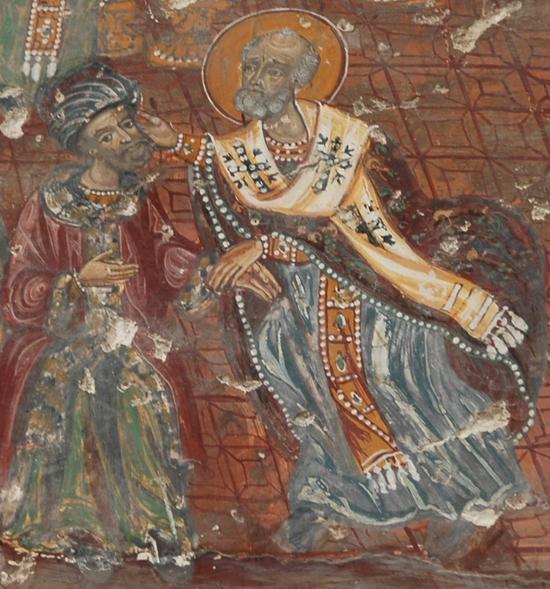
© Livius
Antony R. Henk is a PhD candidate at the Ruhr-University Bochum where he teaches and manages the departmental website. His PhD dissertation focuses on English relic lists, an aspect of his wider interests in the manuscripts, organisation, and liturgy of early medieval Christianity. Antony obtained his M.A. in English Philology from the University of Göttingen, and has worked as a palaeographic analyst and XML editor for the ERC-funded project ECHOE, the Electronic Corpus of Anonymous Homilies in Old English
 A.D.A.M.